
Forced Account Creation Is Costing You 23% of Your Checkouts (Here Is What to Do Instead)
By Jonathan · Founder, PageGains
Most e-commerce stores bleed revenue at the exact moment a customer is most ready to buy. They have the product in the cart, the credit card in hand, and then they hit a wall: "Create an account to continue." That single screen is responsible for more abandoned carts than bad shipping costs, confusing layouts, or slow load times combined.
The 23% Stat That Should Change How You Build Checkouts
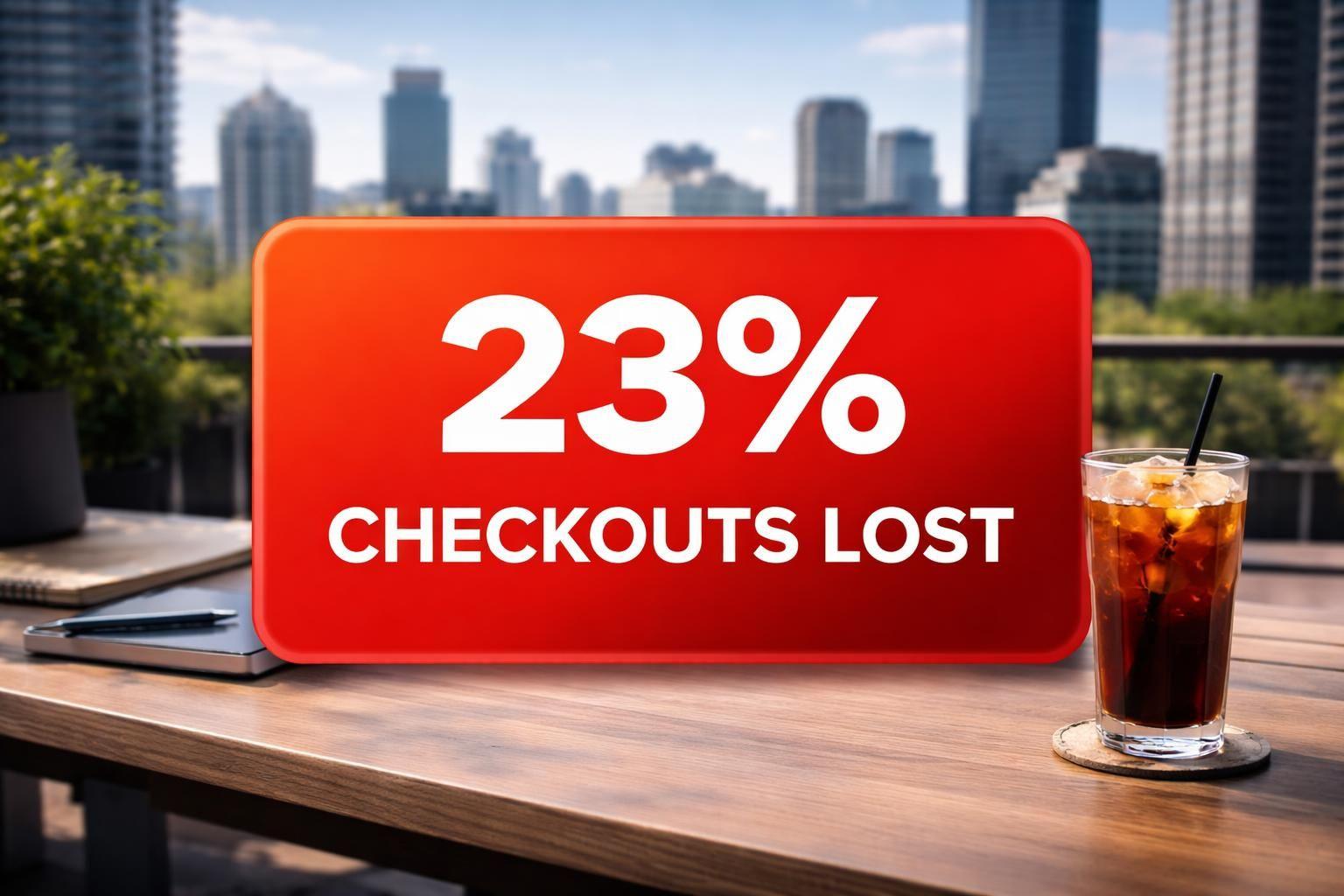
The Baymard Institute has surveyed thousands of online shoppers over multiple years. Their most cited finding: roughly 23% of US adults have abandoned a checkout specifically because the site required them to create an account. Not because they changed their mind. Not because shipping was expensive. Because of a registration form.
That number is not a rounding error. If your store does $500,000 a year, a 23% checkout abandonment rate tied purely to account friction is roughly $115,000 walking out the door annually. The fix is not complicated in concept: give people a path that does not require them to register. But the execution matters a lot, and most stores get it wrong even when they add a guest option.
The problem is usually placement. Guest checkout gets buried below the account creation form, styled in a lighter font, treated like the embarrassing option. Visitors scan quickly. If the first thing they see is a registration form, many assume that is the only path and leave.
Why Shoppers Refuse to Register (It Is Not What You Think)
The instinct is to assume people are lazy. That is not quite right. The more accurate explanation is that shoppers do not trust you yet with a permanent relationship. They want the product. They do not want a login to manage, a password to forget, or marketing emails they did not ask for.
A 2023 survey by Statista found that 54% of consumers cite "not wanting to receive marketing emails" as a primary reason for avoiding account creation. Another large segment worries about data storage and what happens if you get breached.
This is worth sitting with. These are not irrational fears. They are proportionate responses to how most retailers behave post-registration. If you have ever created an account to buy a single phone case and then received four promotional emails a week for two years, you understand the hesitation completely.
The actionable takeaway: do not treat account creation resistance as a UX problem to design around. Treat it as a trust problem to earn your way out of.
How to Structure the Choice Without Killing Either Option
Here is what most checkout pages get wrong. They frame the decision as a binary: "Create Account" vs. "Guest Checkout." One option is styled as the default (often with a filled button), the other as a secondary action (a text link or an outlined button with less visual weight).
The data on button hierarchy is consistent: users click the primary-styled action more often, even when both options are visible. So if you style "Create Account" as the dominant choice, you are actively funneling people toward the option more likely to cause abandonment.
The better approach: give both options equal visual weight, or make guest checkout the default primary action. ASOS does this well. The guest path is not hidden or minimised. It sits at the same level as the sign-in option.
A specific thing to test: replace "Guest Checkout" as the label. It sounds temporary and second-class. Try "Continue as Guest," "Skip Sign-In," or just "Continue with Email." These framings feel less like a consolation prize and more like a legitimate choice.
The Post-Purchase Account Prompt That Actually Works
Guest checkout does not mean you lose the customer relationship permanently. The moment after a successful purchase is the highest-trust point in the entire session. The person just gave you money. The transaction worked. They feel good.
That is exactly when to offer account creation, not before.
A simple post-purchase screen that says "Save your details for faster checkout next time" with a single password field (since you already have their email and address) converts surprisingly well. Shopify's data on this pattern suggests post-purchase account prompts can recover 20 to 30% of the registrations you would have lost by forcing the choice upfront.
The key detail: the form should be minimal. You already collected everything during checkout. All you need is a password. One field. That is the entire ask. If your post-purchase registration screen still has five fields, you are recreating the problem you just solved.
GET YOUR OWN AUDIT
Find these issues on your own page
PageGains analyzes any URL and surfaces these exact problems in ~60 seconds. First audit from $3.99.
Analyze my page →When Mandatory Account Creation Is Actually Justified
This debate is not entirely one-sided. There are legitimate business models where account creation makes sense at checkout, and forcing it does not necessarily hurt conversion.
Subscription products are the clearest case. If someone is signing up for a recurring delivery or a membership, an account is not optional. It is part of the product. The friction is expected and understood.
B2B stores with quote-based pricing, net-30 terms, or approval workflows also have genuine reasons to require registration before purchasing. The customer relationship is longer, more involved, and an account is functionally necessary.
The mistake is applying B2B logic to B2C impulse purchases. If someone is buying a birthday gift at 10pm on their phone, they are not thinking about their purchase history dashboard. They want to complete the transaction and go to bed.
A useful diagnostic question: does the account benefit the customer right now, or just your marketing team? If it is primarily the latter, requiring it upfront is a tax on conversions to serve your CRM.
Social Login Is Not a Silver Bullet
Adding "Continue with Google" or "Continue with Facebook" feels like an elegant compromise. Some users do prefer it. But the conversion impact is messier than the pitch suggests.
The complication: a meaningful segment of shoppers, particularly in older demographics or on work devices, actively avoid social login. They do not want their purchasing behaviour tied to social accounts. Some are simply not logged into those services at the moment of purchase.
Baymard's usability research found that social login adds cognitive load when it is presented alongside account creation and guest checkout, because shoppers now have four decisions to make instead of two. More options do not always mean more conversions.
If you offer social login, test presenting it as an option within the account creation path rather than a third parallel route. Keep the primary decision simple: register or continue as guest. Let social login be a faster way to register, not a whole separate lane.
The One Metric Most Stores Are Not Tracking
Most e-commerce teams track overall cart abandonment rate. Fewer track where in the checkout funnel the abandonment happens.
If you are not segmenting abandonment by step, you cannot know whether your account creation screen is the problem or your shipping calculator is. Both can cause drop-off. They require completely different fixes.
Set up funnel visualisation in GA4 or your analytics platform so you can see the percentage of users who reach the account or guest choice screen and do not proceed. If that number is significantly higher than drop-off at subsequent steps (address entry, payment), you have found your culprit.
A drop-off rate above 15% at the login or registration screen, for a returning visitor segment on a mobile device, is a strong signal to test. Run a simple A/B test: equal-weight buttons for both options vs. your current default. Give it two to three weeks of traffic. The result will tell you more than any opinion about what your customers "should" want.
GET YOUR OWN AUDIT
Find these issues on your own page
PageGains analyzes any URL and surfaces these exact problems in ~60 seconds. First audit from $3.99.
Analyze my page →What GDPR and Privacy Laws Actually Require (Versus What Stores Assume)
There is a persistent myth that requiring account creation is necessary for compliance or data management reasons. It is not, in most cases.
GDPR and similar regulations require that you collect only the data necessary for the stated purpose (purchasing a product) and that users give informed consent for additional uses (like marketing). None of that requires a registered account. A guest checkout can be fully compliant. You collect the transaction data, you fulfil the order, you retain what you are legally required to retain, and you do not use that email for marketing without separate opt-in.
Requiring registration to "protect" customer data is usually reverse logic. Storing credentials, managing password resets, and maintaining user accounts actually increases your data liability, not reduces it.
If your legal or compliance team is pushing for mandatory registration, the conversation worth having is whether a guest path with proper data handling solves the same problem without the conversion cost.
The Bottom Line
The data is not ambiguous. Forced account creation at checkout is one of the most reliably damaging friction points in e-commerce, and it has been documented clearly for over a decade. The fact that so many stores still default to it reflects inertia and internal pressure from marketing teams, not evidence that it works.
The practical path forward is simple in structure: make guest checkout a genuine first-class option, test your button hierarchy to confirm neither option is visually suppressed, and move the account creation ask to the post-purchase moment when trust is at its peak. Those three changes alone can recover a meaningful slice of the revenue you are currently losing at the final step.
The deeper principle is worth carrying into every checkout decision you make. Every step you add, every form field you require, every choice you force before someone can complete a purchase is a bet that your business need outweighs the customer's patience. Most of the time, with account creation, that bet is wrong.
Keep reading

Sep 15, 2026
The Trust Signal That Outperforms Security Badges for Most Shoppers (And Takes 10 Minutes to Add)
Apr 14, 2026
We Simplified Store Navigation and Checkout Conversions Jumped 18%: Here's Exactly What Changed
Apr 3, 2026